
Google’s Post-I/O AI Strategy: Fast and Cheap Beats Biggest and Best
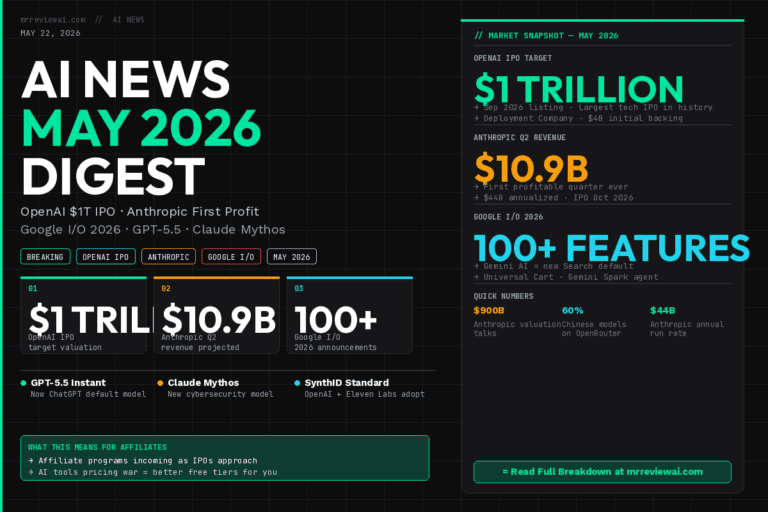
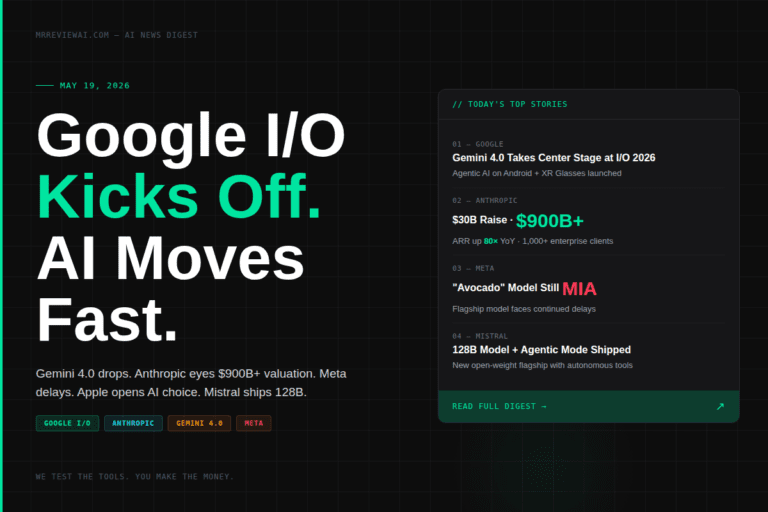
Google I/O 2026 made Google’s AI strategy explicit.
Rather than competing with Anthropic’s most powerful models or matching OpenAI on raw benchmark performance, Google is prioritizing a different axis: speed and cost at massive scale.
The evidence: Google launched Gemini 3.5 Flash as its flagship I/O announcement, not a frontier model designed to top leaderboards. Gemini 3.5 Flash is priced at $1.50 per million input tokens and runs 4x faster than its predecessor.
The Logic
Google has something OpenAI and Anthropic don’t: billions of active users across Gmail, Search, Docs, Maps, and YouTube. Deploying AI across those surfaces requires models that are cheap enough to run at enormous scale, not models optimized for a PhD benchmark.
Executives at Google have described this as a deliberate tradeoff: stay at the frontier, but don’t sacrifice speed and cost to chase benchmark rankings that most users will never see.
Gemini Spark
Google also introduced Gemini Spark, a new always-on AI agent designed to run in the background across Google Workspace, connect to third-party apps, and eventually interact with local files.
Spark is positioned as Google’s answer to the agent-first AI shift. Rather than a chat interface users open and close, Spark is meant to operate continuously — monitoring tasks, surfacing information, and acting on behalf of users without being explicitly triggered each time.
What This Means for the AI Tool Market
Google’s strategy puts pressure on the entire mid-tier SaaS AI tool market. If Gemini 3.5 Flash at $1.50 per million tokens can do what tools charging $50/month per seat are doing, the value proposition of those tools needs to sharpen fast.
For users of AI productivity tools, this is the best possible competitive dynamic. Prices are falling and performance is improving. The companies that survive will be the ones that do something specific better than a general-purpose model.